

The Fermenation and Predigestion of High Moisture Forages
We have been fermenting forages for more efficient cattle production for over 20 years. Throughout that time, we have researched and presented several explanations for the increased performance, including the extended breakdown of complex carbohydrates and the production of secondary microbial metabolites. We recently performed a mass-spectrometric analysis comparing raw alfalfa with fermented alfalfa. Both samples came from the same field, with the only difference being that one sample was fresh and one sample had been fermented using our proprietary BioFerment anaerobic microbes. The picture left us speechless!
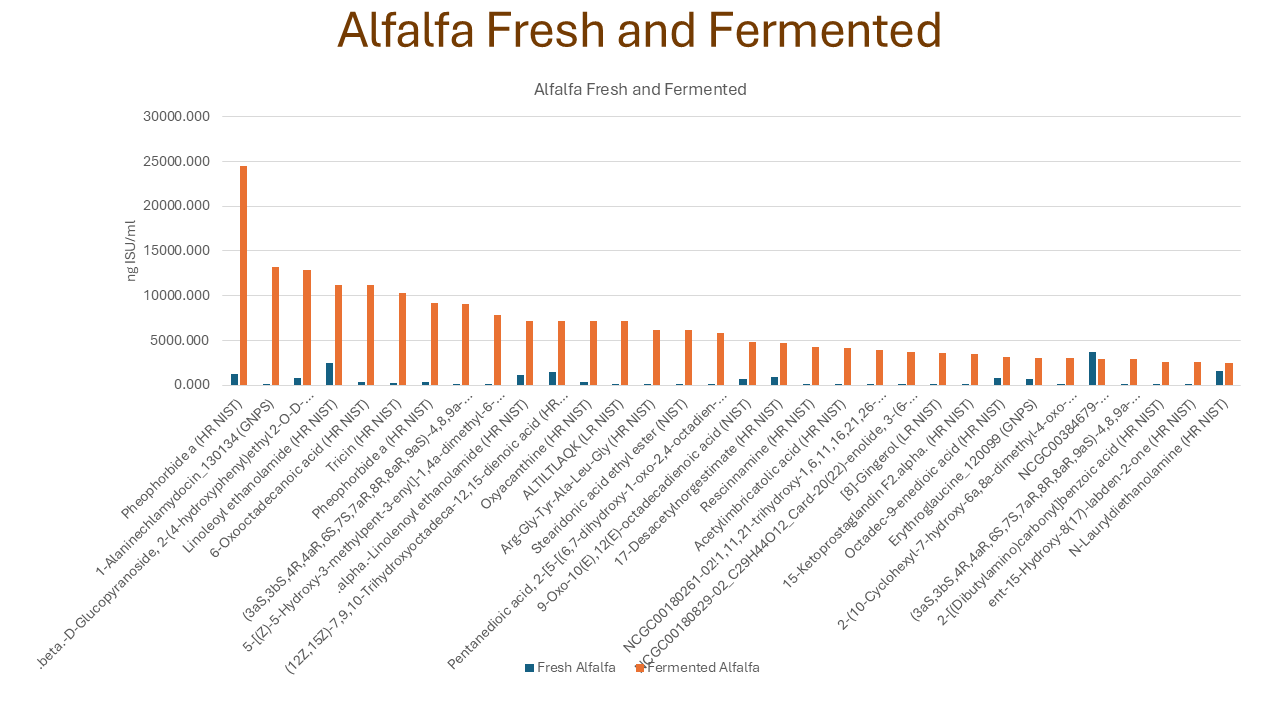
The blue bars represent the nutritional levels of the raw alfalfa. Most of them are very small and almost invisible against the orange bars. The orange bars represent the nutritional levels of the fermented forage - vastly different!
Complex Plant Structures
Nature transfers nutrients from the air and the soil to plants. Once in the plants, those nutrients are locked up until they are eaten by something else. When a cow (or other ruminant) eats raw forage, most of those nutrients are still locked up and unavailable. The purpose of the digestive system is to break down the forage and increase the nutrient availability. However, cattle are very inefficient digesters, extracting only about 5% of the total consumed weight. The remaining 95% is expelled in the manure. Bio Minerals Technologies (BMT) uses our proprietary blend of anaerobic microbes to ferment and predigest that same forage, significantly increasing nutrient availability and transfer.
Proper Fermentation = Increased Nutrient Availability
If we look at just one element from the above graph, it provides a significant example of why our BMT fermented forage outperforms raw forage. The first element on the graph, Pheophorbide A, is generated by the digestion of plant matter as a breakdown product of chlorophyll. The mitochondria within the animal's cells can use the Pheophorbide A along with carbon from carbohydrates to produce energy. According to this chart, the fermented alfalfa contains almost 25 times more potential energy than the raw alfalfa.
Up to 80% of a plant's structure is composed of cellulose, hemicellulose, and lignin, which are either partially digestible or non-digestible. This is a huge reserve of carbohydrate energy that is typically unavailable to the animals. Through our fermentation microbes, we break these complex components into smaller, more easily digestible elements, increasing the digestible carbohydrates available to the cattle from their feed. Our cattle, on fermented forage, increase their feed utilization to almost 15% of the total consumed weight. This is a threefold increase in nutrition, using the same forage.
The increased carbohydrate digestibility pairs with the Pheophorbide A component to realize that energy potential and increase the growth and performance potential of the animals. And this is happening before it even enters the animal's digestive system. More energy with more nutrition means faster growth and stronger animals in every way.
Same Forage - More Nutrition
We have been watching the performance differential between our fermented forage and standard forage for over twenty years. With this latest analysis, we can see the nutritional reasons behind the performance. Through our fermentation, we simply have more nutrition available from the same volume of forage.
Biological fermentation (extended predigestion) increases nutrient solubility for more efficient feed utilization and faster growth and performance for the cattle.
If you want to see what the theory looks like in practice, take a look at the data from our fermented forage trials.